lendin51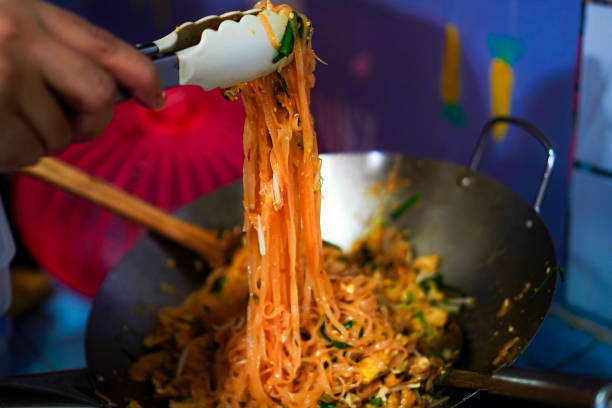
If you’ve ever strolled through a Bangkok night market, you’ve probably seen that familiar scene:
rice noodles sizzling in an iron wok, the air filled with the tangy aroma of tamarind and the sweet scent of palm sugar, the rhythmic clatter of the vendor’s spatula almost a constant background noise. That’s right, that’s Pad Thai —the soul of Thai street food.
The charm of this dish lies in its balance—sour, sweet, salty, umami, and spicy, each flavor complementing the others without overpowering the others, yet building upon each other in a layered way. No wonder Pad Thai has gone from a street stall to a Michelin-starred restaurant menu, becoming one of the most representative national dishes of Thai culinary culture.
Want to explore further? You can read the Flavorful Food Guide to see how chefs in Oceania reinterpret these classic flavors with local ingredients, allowing “street food” to shine again on exotic tables.
The historical origins and cultural significance of Pad Thai
The Evolution from “National Policy” to “Cultural Ambassador”
Pad Thai is not an ancient Thai dish; its story dates back to the 1930s. At that time, Thailand was promoting a national identity movement, and in order to promote domestically produced rice noodles and reduce rice consumption, a dish that combined Chinese stir-fried noodles with local seasonings—Pad Thai—was created.
Initially a product of policy, it unexpectedly became a hit among the people. Over the decades, it transformed from a “national policy dish” into a “national dish,” and then from a street stall to a global phenomenon. Today, it’s no exaggeration to say that “Pad Thai is a cultural icon of Thailand.”
Timeline of cultural evolution:
1930s–40s: Symbol of nationalism, promotion of domestically produced ingredients.
1950s–1970s: It spread to street stalls and became an affordable food.
From the 1980s to the present: it has graced international dining tables and become a representative of Thai culinary culture.
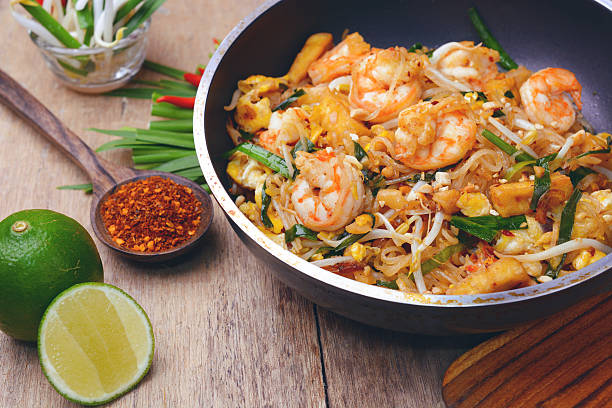
Local Versions: Regional Characteristics in a Bowl of Rice Noodles
Pad Thai in different regions each has its own unique features.
Bangkok version : Slightly sweeter, with a rich sauce and abundant ingredients.
Chiang Mai version : Slightly sour, often with local vegetables and herbs, resulting in a more refreshing taste.
Southern version : Prefers spicy food and seafood, with a more unrestrained and direct flavor.
This diversity is precisely what makes Thai cuisine so captivating—there are no absolute standards, only different understandings of “balance.”
The essence of authentic Pad Thai
indispensable key ingredients
| Main ingredients | Function Description |
| Dried rice noodles (3–5 mm wide) | Maintaining the perfect balance between firmness and sauce absorption |
| Tamarind Sauce | Provides a refreshing sour taste. |
| Palm sugar | Brings a caramelized aroma and a mellow sweetness |
| Fish sauce | Adds savory and deep umami flavor |
| Tofu and shrimp | Traditional protein pairings, balancing texture and flavor |
Golden taste ratio
Sweet and sour balance: Tamarind jam to palm sugar in approximately a 1:1 ratio
Salty and savory base: A touch of fish sauce for finishing touch
Adjust spiciness: Add dried chili powder according to personal taste.
This ratio is not a rigid formula, but more like a “chord on the tip of the tongue”—only when it is perfectly coordinated can the soul of the whole bowl of Pad Thai be in place.
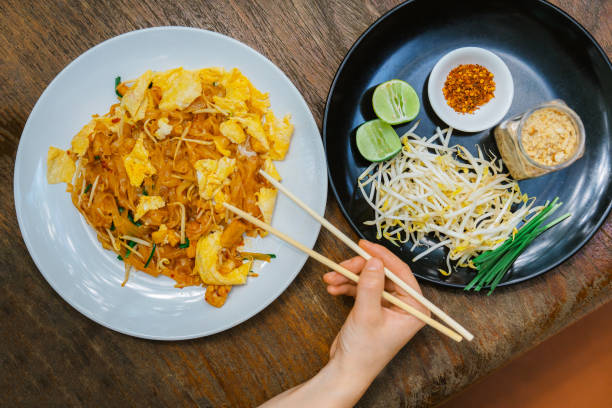
The Scientific Secrets of Sweet and Sour Charm
Why is this dish so addictive? From the perspective of taste science, the answer lies in “contrast”.
The sour taste (tamarind) stimulates saliva production, making people want to eat it more.
The sweetness (palm sugar) balances the acidity, making the overall taste smoother.
Umami (fish sauce, shrimp) enhances the flavor profile and makes the taste last longer.
According to the Thai Food Nutrition Database, a standard serving of Pad Thai contains:
Carbohydrates : the primary source of energy;
Protein : Shrimp, tofu, and eggs provide a feeling of fullness;
Fiber and Vitamin C : Bean sprouts and tamarind are indispensable.
Homemade Pad Thai: A Battle Between Wok Hei and Time
Preparation
Soak the rice noodles in cold water for 30 minutes to make them soft but not mushy;
Prepare the sauce in advance so you won’t be in a rush when stir-frying;
Cut all ingredients into similar sizes to ensure even heating;
Key: The fire must be high enough! The key to stir-fried Pad Thai is that “wok hei” (wok aroma).
Cooking process
For the base aroma : Heat the pan with cold oil, sauté minced garlic and dried chili peppers until fragrant, then fry the tofu until golden brown.
Add protein : Add shrimp and stir-fry until they change color.
Core Stir-fried Rice Noodles : Add rice noodles, pour in the pre-mixed sauce, stir-fry over high heat until the sauce evenly coats the noodles.
Finishing touches : Crack in the eggs and quickly stir to break them up, then add bean sprouts and chopped chives.
Finishing touch : Sprinkle with crushed peanuts and chili powder, then squeeze in a few drops of lime juice. That instant aroma is the soul of the entire dish.
Tip: Want a richer sauce aroma? Try slowly pouring it along the edge of the pan to allow the high temperature to caramelize it slightly.
Frequently Asked Questions (FAQ)
Q1: Why does my Pad Thai always stick to the pan?
A: The pan isn’t hot enough or there’s not enough oil. You can use a non-stick pan, or make sure the rice noodles are drained before putting them in the pan.
Q2: Can I use other noodles instead of rice noodles?
A: Italian wide noodles or rice noodles are good alternatives, but the texture will be slightly different.
Q3: Can vegetarians eat this?
A: Of course! Use mushroom soy sauce instead of fish sauce, and pair it with tofu and vegetarian shrimp.
Q4: Can I make it in advance?
A: It’s best to cook and eat it immediately. It can be stored in the refrigerator for one day. When reheating, add a little water and steam it for a softer texture.
Conclusion: A bowl of Pad Thai holds the bittersweet essence of life.
Pad Thai unforgettable isn’t just its perfect balance of sweet and sour, but also its “street vibe”—simple, vibrant, and inclusive.
Once you’ve mastered the basic proportions, you’re completely free to experiment, adjusting the sweet, sour, salty, and spicy flavors to give this stir-fried noodle dish your own personality.
Whether under the smoky lights of Bangkok’s night markets or in exotic restaurants in Sydney and Auckland, Pad Thai uses the same language—delicious food—to connect cultures and people’s hearts.